
Brazoria County Previous Resident Sources
One address requires several time-sensitive sources. Begin with the parcel and its legal description, because those identifiers bridge address changes. Deeds place land in an ownership sequence. Tax rolls offer annual property context, while directories and census schedules add household snapshots when they are available. The County Clerk’s current online index is convenient, but the historical microfilm inventory, library collections, and in-person channels remain essential for a backward search.
| Source | Years it covers | Where held | What it shows |
|---|---|---|---|
| Spanish deed records | 1831–1893 | County and TSLAC microfilm, including translation | Early land transfers and legal descriptions |
| English deed record | 1837–1886; index through 1894 | County Clerk and TSLAC | Grantor, grantee, land, and instruments |
| Online official-record index | 1829–current capture | County Clerk linked application | Names, document type, dates, and legal references |
| Tax rolls | 1837–1910 | TSLAC and George Memorial Library | Annual taxable owner and property context |
| Probate minutes, wills, bonds | 1837–1887; 1837–1886; 1837–1875 | TSLAC, FamilySearch, and county channels | Heirs, executors, residence, and estate dates |
| Federal census | Public through 1950 | NARA, Census, and library databases | Household, age, relationship, and address or enumeration district |
| City and telephone directories | Town-specific run unverified | Libraries, archives, and scans | Irregular household or address snapshots |
The captured online listing reached 08/14/2026, but that end date is a live value and must be verified in the application. Its presence does not replace the Clerk’s official repository or historical counter and microfilm access.
For a nineteenth-century gap, TSLAC specifically lists Deed Record from 1837 to 1886 with an index through 1894, Spanish Deed Record from 1831 to 1893 with English translation, and Tax Rolls from 1837 to 1910. It also lists County Court Minutes from 1867 to 1915, administration bonds from 1837 to 1875, probate minutes from 1837 to 1887, and probate wills from 1837 to 1886. Those are named series to request, rather than an assumption that every early document was digitized.
Brazoria County Previous Resident Start
Open the Brazoria Central Appraisal District eSearch result for the current address. Preserve both the owner mailing address and the situs, then copy the geographic ID, property ID, legal description, abstract or survey, subdivision, lot and block, owner name, and available tax-year clues. The portal asks address users to place the street number and street name in separate fields and to omit prefix, suffix, and unit information from Street Name.
The BCAD search interface is the starting record for tracing Brazoria County previous residents by address.
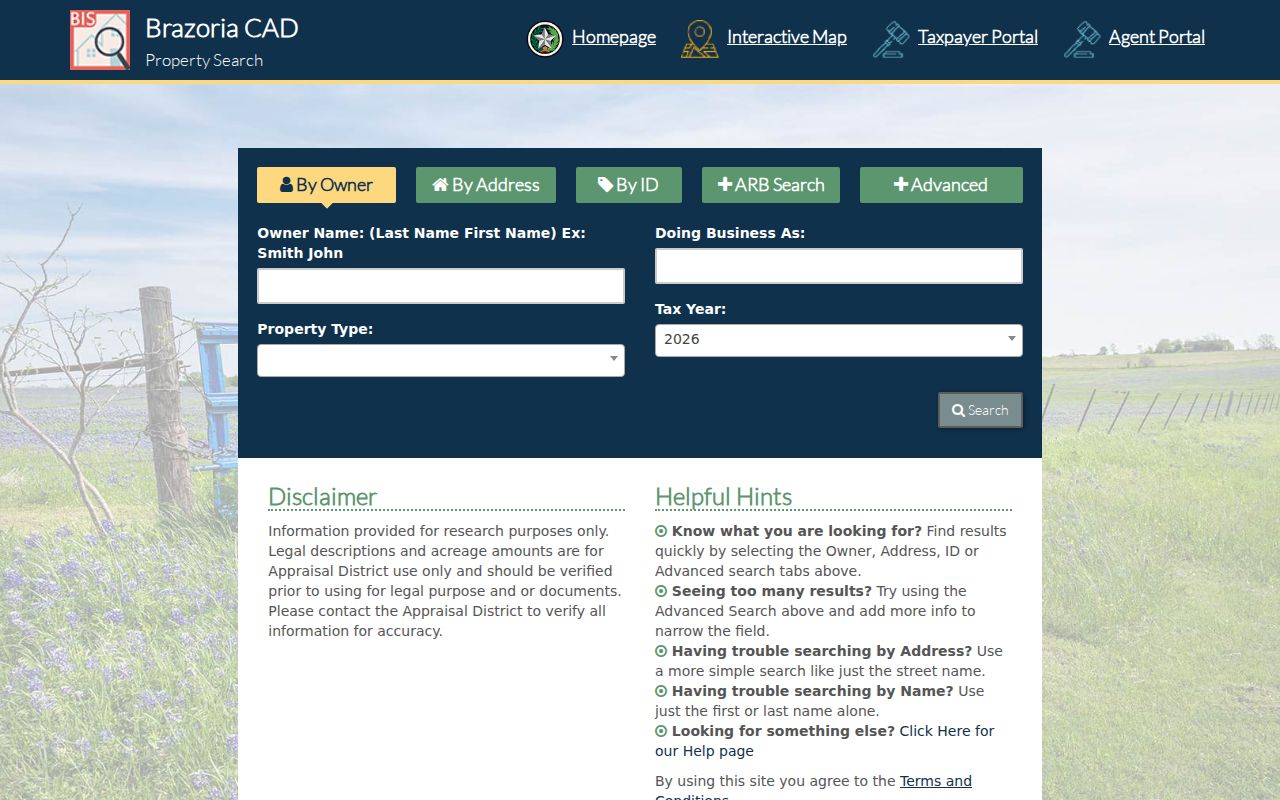
Use the geographic ID and legal description as the durable bridge when the street form fades from an older instrument.
Brazoria County Deed Chain Backward
The County Clerk official-records search turns the current parcel into a prior-owner trail. Search the current BCAD owner as a grantee near the apparent purchase date. Open the purchase deed and compare the legal description before accepting a same-name match. The document may carry the grantor and grantee, execution and recording dates, instrument number or book/page, consideration if visible, liens, restrictions, easements, and a reference to an earlier deed.
- Find the current owner’s purchase as a grantee and save the instrument reference.
- Read the deed image or request a copy to identify the seller and legal description.
- Search that seller as a prior grantee in an earlier date range.
- Repeat backward while matching the same lot, block, subdivision, abstract, survey, or tract.
- When an entity, estate, trust, or representative appears, search the relevant name form and probate or assumed-name records as appropriate.
- Grantor
- The person or entity transferring an interest in a recorded instrument.
- Grantee
- The person or entity receiving that interest.
- Chain of title
- The sequence of recorded transfers connected by the same land description.
- Legal description
- The recorded land identifier, such as lot and block or abstract and survey, that can outlast a formatted street address.
Brazoria County Previous Deed Access
When the online index or image stops, use the County Clerk’s East Annex public computers at 1524 E. Mulberry in Angleton, the Clerk counter, a written search or copy request, TSLAC microfilm, or the FamilySearch Catalog. The Clerk states that online records can be redacted and may not be complete or unaltered. The historical deed series begins in 1837 in the TSLAC inventory, while Spanish deeds run from 1831 to 1893 and include an English translation route.
The TSLAC Brazoria County microfilm inventory identifies the historical alternatives to a web-only deed search.
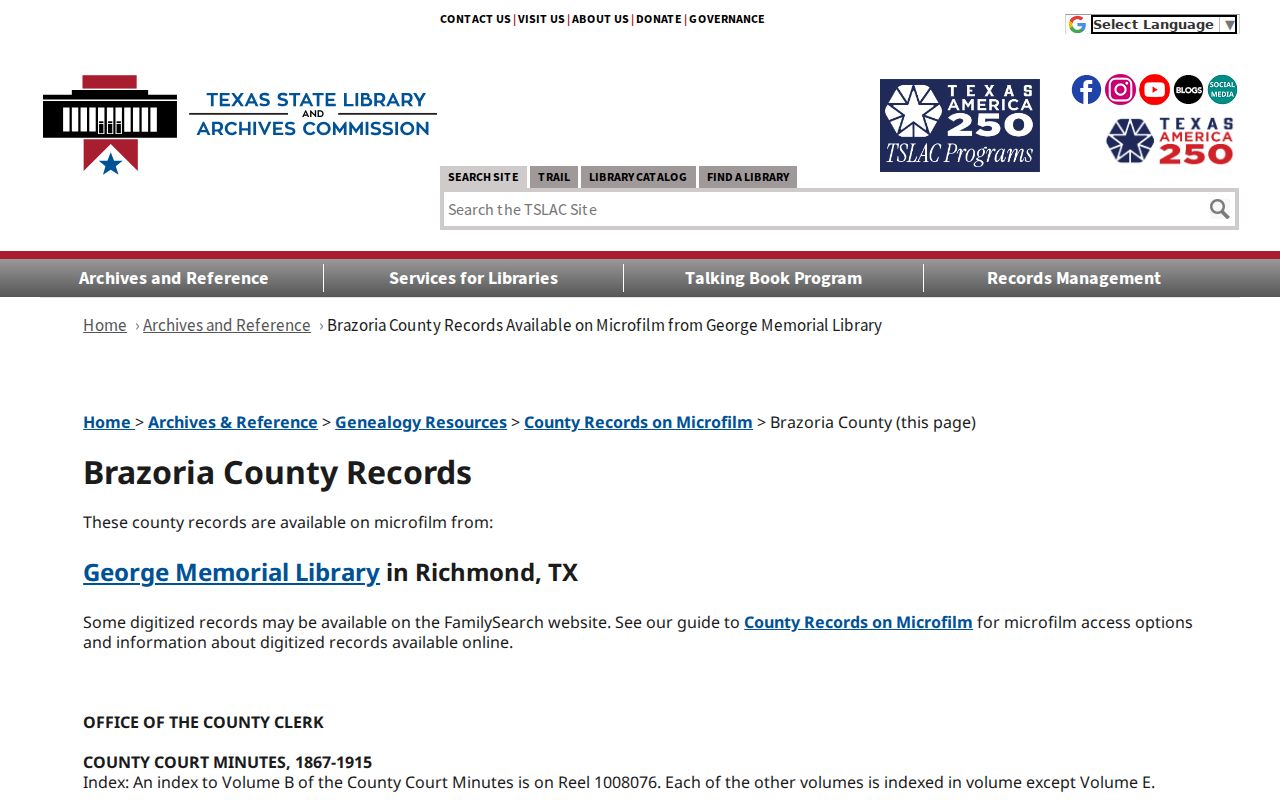
Its listed reels connect deeds with tax rolls, probate, wills, marriage records, and county minutes that can explain an ownership change.
Brazoria County Previous Ownership Dates
Tax rolls from 1837 through 1910 can put an annual property context beside a deed transfer. They do not replace a recorded title instrument, yet they can identify an owner or taxable property across years where the deed timing is unclear. Probate minutes, wills, and administration bonds provide another endpoint when a parcel moves into an estate. An executor, heir, or estate reference in a deed should be reconciled with the applicable probate record rather than treated as a simple name change.
The Historical Museum cemetery database reports more than 23,000 interments across 140 Brazoria County cemeteries. An obituary or cemetery entry can corroborate a death or family connection, but it does not establish title without the deed and probate trail.
Contemporary permit reports are a separate date clue. Angleton sample reports include address, project, contractor, fee, and valuation fields. A permit can help date an improvement, electrical work, plumbing, health activity, right-of-way work, or a remodel, but it does not prove title or identify everyone who occupied the property. Request only non-confidential city or county permit and inspection material when that limited date evidence is needed.
Brazoria County Past Household Pairing
Deeds identify the land trail. A local directory and census schedule may add a household snapshot for an address or nearby enumeration district. Directory coverage is town-specific and unverified, so check catalog dates before expecting an annual sequence. Census schedules are public through 1950. Match an entry’s address, spouse, age, place, and date against the property record instead of assuming two similar names belong to the same household.
The Brazoria County city directory resource covers the historical collections and their access channels. For a direct research request, the Brazoria County Library System offers genealogy databases, maps, and reference help. The Historical Museum and Adriance Library accept research queries through their collections service and can review local research files.
Directory and census process: address or legal description → directory entry for a candidate year → census household for the closest released census → deed and tax comparison → obituary, cemetery, or probate endpoint where needed. The BCLS Genealogy and History service lists Ancestry Plus for in-library use, Fold3 Library Edition, FamilySearch, HeritageQuest Online, Texas history material, and historical maps. Museum staff can be contacted with a full address, legal description, approximate build date, and the years requested.
The TSLAC city-directory reference guidance explains the kinds of address and household details an older directory can contain.
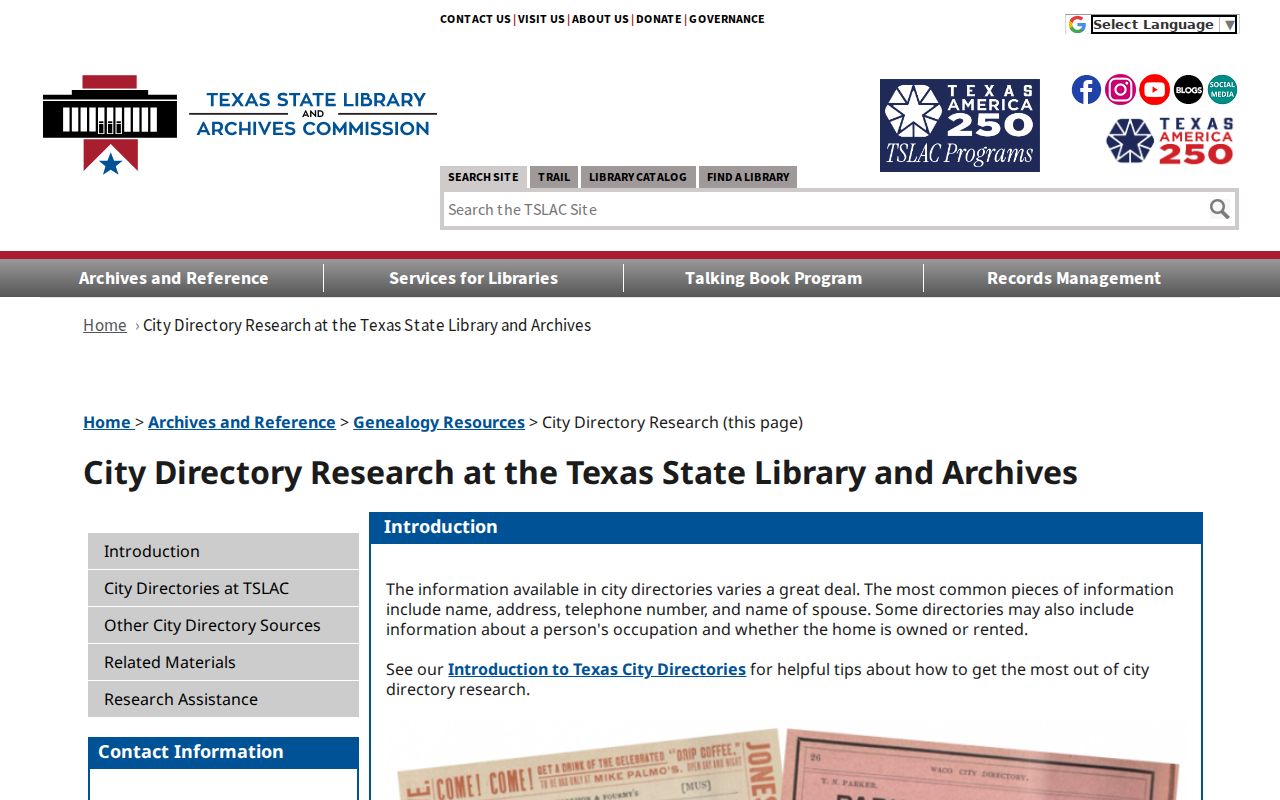
Use a city directory as a dated lead, then test its place and person details against census, deed, obituary, and probate evidence.
Brazoria County Previous Address Geography
Older records can name Brazoria, Velasco, Columbia, West Columbia, or a rural community rather than the modern municipality. Brazoria served as county seat until Angleton replaced it in 1896, making the town label and courthouse context important parts of an older search. Use a plat, old road name, post office, legal description, lot and block, or abstract and survey to cross that geography. No confirmed local street-renumbering year was located, so a date should not be guessed.
Brazoria County Record Catalog Quirk
TSLAC notes no Volume I in the historic deed record and no Volume I in probate minutes. Treat that as a catalog caution, not a claim that material was destroyed or lost. Confirm the volume label, date range, and index before assuming a chronological gap. The absence is useful because a researcher can ask for the named reel or index rather than search for a volume the catalog does not list.
George Memorial Library in Richmond is the holding location named by the TSLAC inventory. The County Clerk’s public-records page, East Annex computers, TSLAC microfilm, FamilySearch Catalog, and a written copy or search request are separate access channels, not interchangeable copies of one database. Record the document number, book and page, reel, and requested date range before asking for help. That makes a counter or library request more precise when an early deed or probate entry is not returned online.
Note: Older Brazoria County land research often requires a named record series, a reel, and a legal description rather than a modern street number.
Brazoria County Previous Resident Limits
Previous residents are not identical to previous owners. Appraisal, deed, and tax sources record parcel and title information. They do not create a complete historical household list. Utilities, motor-vehicle records, protected voters, sealed proceedings, adoption records, and other confidential information remain unavailable. Sanborn map coverage for a Brazoria County city was not confirmed in the research pass; the Library of Congress collection is a lead to check city by city, not a verified local-year run.
Lawful use. Use address history for family research, house history, estate matters, civic research, or personal curiosity. Texas Penal Code §§42.07 and 42.072 prohibit harassment and stalking; records do not permit following, repeated contact, intimidation, or surveillance.