
Brazoria County City Directory Collections
There is no verified, complete local run of city directories for every Brazoria County town. That matters. The useful collection map begins with a catalog check, then a scan check, before treating a title as evidence for Angleton, Alvin, Freeport, Lake Jackson, Brazoria, or Pearland. The Texas State Library and Archives Commission city-directory guide describes Texas reference-room holdings and points researchers to several wider collections. Its guidance explains that directories were gathered through surveys and appeared at irregular intervals, so a county town may occur in a county list without having a full resident section.
| Collection | Years | Where Held | Access |
|---|---|---|---|
| Texas city-directory research collection | Late nineteenth century to present leads | TSLAC Reference Reading Room, Austin | On-site print and microform; staff do not search or scan by phone or email |
| Brazoria-area city and telephone directory leads | Local run not verified | Brazoria County Library System, WorldCat, and local-history files | Ask staff to check catalog and branch holdings |
| Portal to Texas History county-filtered material | Varies by item | University of North Texas online collection | Online item search and scan review |
| Texas County Marriage Index | 1837–1977 | FamilySearch | Online index; Brazoria coverage lists 8,833 records |
Two narrow leads deserve careful wording: a 1918 Polk's Morrison & Fourmy Austin directory and a 1924–25 Galveston directory include Alvin and Angleton in county or town lists. They do not establish a complete Brazoria residents run. Catalog title, publisher, town coverage, issue date, and the actual scanned pages all need validation first.
Brazoria County City Directory Shelves
The Brazoria County Library System genealogy and history service is the closest practical starting shelf. Its Angleton-area contact is 912 N. Velasco, Angleton, TX 77515, at 979-864-1505. The service lists Ancestry Plus for in-library use, Fold3 Library Edition, FamilySearch, HeritageQuest Online, Texas history material, and historical maps by city, county, and year. Those tools can supply context around a directory title, particularly census, military, map, newspaper, and family-history leads.
The library does not publish a branch-by-branch inventory of city-directory or obituary years. Ask a reference librarian to search the BCLS catalog, WorldCat, and local-history files for a named town and a precise year. That route is stronger than assuming that every branch has the same volume or that an online title is complete. HeritageQuest and other licensed services can also have card, branch, or access conditions that should be checked at the time of research.
TSLAC's city-directory research guide explains the reference-room access route and helps identify the right kind of volume before a visit or catalog request.
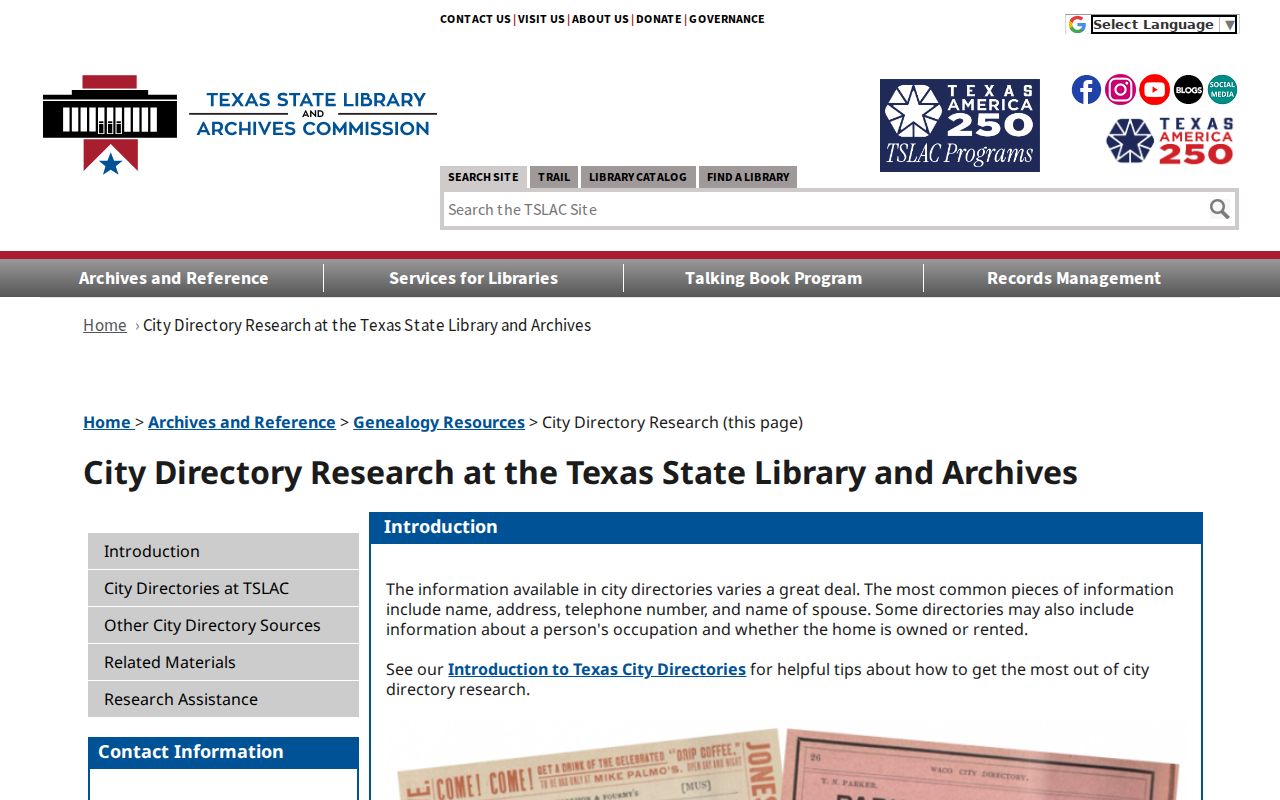
The reference-room limitation explains why a catalog confirmation and an in-person plan may be needed for a particular volume.
Brazoria County City Directory Gaps
A gap is a research finding, not permission to fill in a year range. No official source in the available material publishes a complete publisher-by-publisher inventory for Brazoria County branches or towns. A volume may cover only a larger city, list a county business section, omit rural routes, or use a mailing place different from the modern community label. A blank result may also reflect a missed surname variant, a boundary limit, an irregular publication year, or a household that was never surveyed.
The microfilm route is more concrete for companion records. The TSLAC Brazoria microfilm inventory names deed, marriage, probate, court-minute, and tax-roll series held through George Memorial Library. These are not city directories, but they can test a household trail when a directory year has not been located.
TSLAC also points researchers toward UNT, the Dolph Briscoe Center, library-access HeritageQuest, Ancestry city directories, WorldCat, and the Library of Congress directory guide. Each route has its own catalog and image limits. Treat a search result as a lead until the exact town and issue can be opened, since a county reference or an advertisement page may not contain the alphabetical household material sought.
Reading Brazoria County City Directories
When a suitable volume is confirmed, read its own key before copying any shorthand. The general TSLAC guidance says an alphabetical entry can give a surname, given name or initials, spouse notation, occupation, employer or business, address, telephone, and an owner or renter mark when that publisher used one. The street section can reverse the path by arranging house numbers and occupants by address. A field is a clue from that edition, not a guarantee that every title used the same columns or symbols.
| Name | Surname and given name or initials, with a spouse in parentheses or a widow notation where that volume uses one. |
|---|---|
| Occupation | A role, employer, or business listing when the publisher printed it. |
| Address | A street number, street, or route description, sometimes with telephone information. |
| Owner or renter mark | A publisher-specific notation that must be read against that volume's key. |
| Business page | Business name, proprietor or officer, address, telephone, advertisements, and public-service listings. |
- Criss-cross section
- The part of a later directory arranged by street address, allowing a name entry to be checked against nearby occupants.
- Householder index
- An alphabetical listing organized around the household contact, not proof that every person in a home was included.
- Abbreviation key
- The publisher's explanation of shorthand, normally printed near the front or back. Save it with the entry because meanings differ by volume.
Use the entry and its key together. An unverified local scan cannot support a claim about an exact Brazoria publisher symbol.
Brazoria County Directory Digitization Leads
The UNT Portal to Texas History Brazoria County search provides a county-filtered route for digitized historical material and newspaper leads. Search by town as well as county, then inspect the item record and image rather than relying on a search snippet. The local newspaper ecosystem includes the Alvin Sun and Brazosport Facts, which can help identify a marriage, death, civic notice, address change, or other date to test against a directory lead.
The UNT results are a discovery tool, not proof that every item is a directory or that a town has an uninterrupted run.
The county-filtered UNT search returns item-level historical materials that need scan-by-scan review.
Its item-level records help separate a useful local scan from a broader county-history result.
Brazoria County Directory Household Trail
Trace one household only after a city directory volume and place have been confirmed. Start with a name spelling, then keep the address, spouse notation, occupation, and any owner or renter mark as separate clues. In a rural county, add the post office, route, nearby city, and community name. Older papers may say Brazoria, Velasco, Columbia, or another place rather than a modern city label.
- Find the surname in a confirmed directory year and record the exact printed form.
- Check the street or criss-cross section when the volume has one, then note nearby households without assuming family ties.
- Repeat with each available year, preserving address changes and publication gaps.
- Pair a nearby directory year with the 1930, 1940, or 1950 federal census household, keeping the two record dates distinct.
- Use a newspaper notice, probate file, deed, cemetery record, or marriage index to test why a name disappears or changes.
A disappearance can mean a move, death, changed spelling, rural-route treatment, survey omission, or an unlocated issue. It does not establish one explanation by itself.
Brazoria County Directory Census Pairings
Federal census schedules through 1950 are public. A census household can supply relationship, age, birthplace, occupation, and sometimes a street or house number. It should be paired with a directory issue near 1930, 1940, or 1950, never treated as the same day. Post-office names, rural routes, and boundary differences can make the same household appear under a neighboring place.
FamilySearch's Texas County Marriage Index adds another dated family connection. Its coverage table shows 8,833 Brazoria records for 1837–1977. A marriage index identifies an event lead, not a residence list, but it can help distinguish two same-name households or point toward a newspaper or County Clerk record.
The FamilySearch marriage index provides a dated companion source for a family trail.
The displayed coverage count supports the index's county scope, while each result still needs to be checked against its own event details.
Brazoria County Records Move
Brazoria was the county seat until Angleton replaced it in 1896. The first courthouse stood in Brazoria in 1839, an 1895 courthouse served briefly, and the Angleton courthouse history then continued with an 1897 building, later expansions, and the present 1940 courthouse. That move helps explain why an early family trail may use Brazoria or Columbia-area context while a later record leads to Angleton.
For older households, the most dependable bridge is usually a legal description, deed, tax roll, probate record, census place, or post-office label. The county-seat story gives useful context, but it does not create a missing directory volume.
Brazoria County Directory Endpoints
The Brazoria County Historical Museum collections offer a hyper-local alternative when a directory trail ends. The Museum's Adriance research material includes genealogical and photographic holdings, research files, and staff help at research@bchm.org or 979-864-1208. The Old 300 database is handled by email because it grew to include private information. It is not a public directory.
The museum reports more than 23,000 interments in 140 county cemeteries through its BCGEN-linked cemetery resource. That scale makes cemetery evidence a useful endpoint for a household trail, especially alongside an obituary, probate record, or dated directory entry. Verify a burial with the cemetery or underlying record when accuracy matters.
The Census county profile supplies geographic context only.
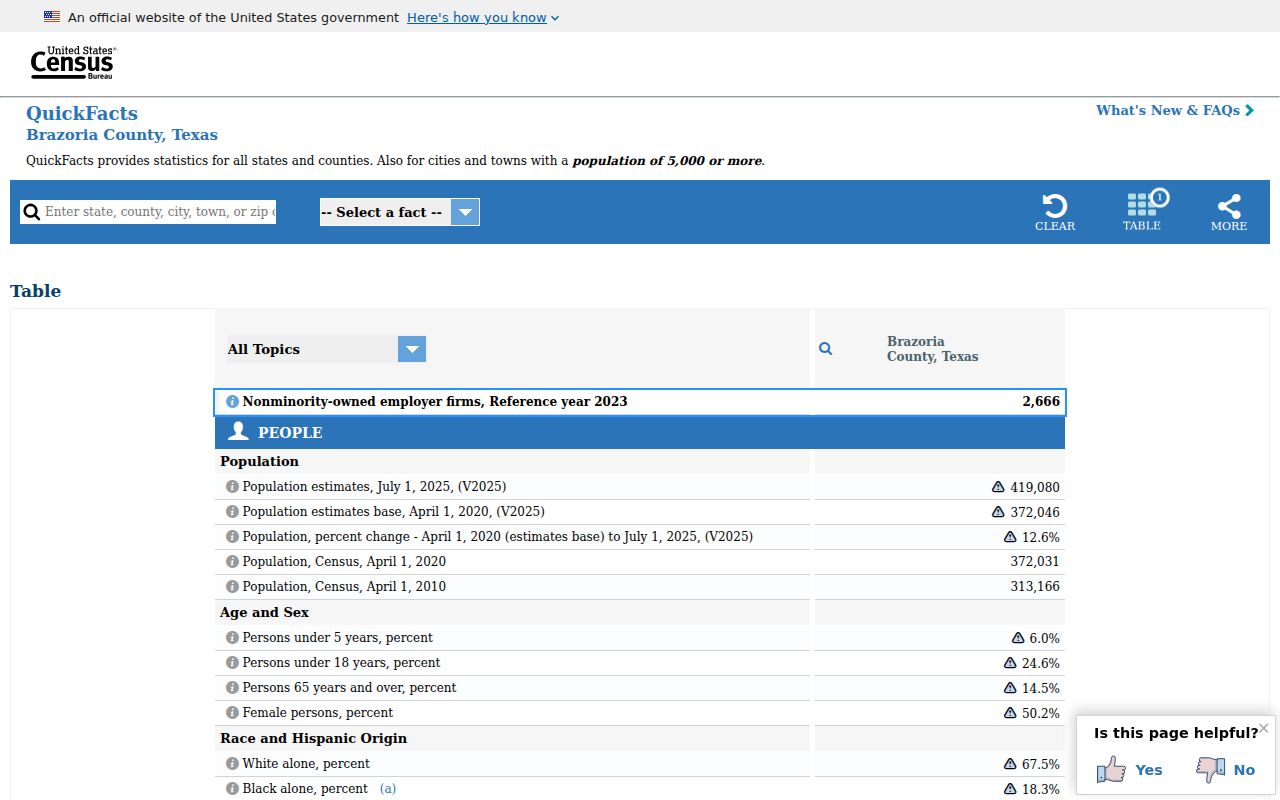
County growth and size help explain why town, post-office, and rural-route labels deserve the same care as a surname.